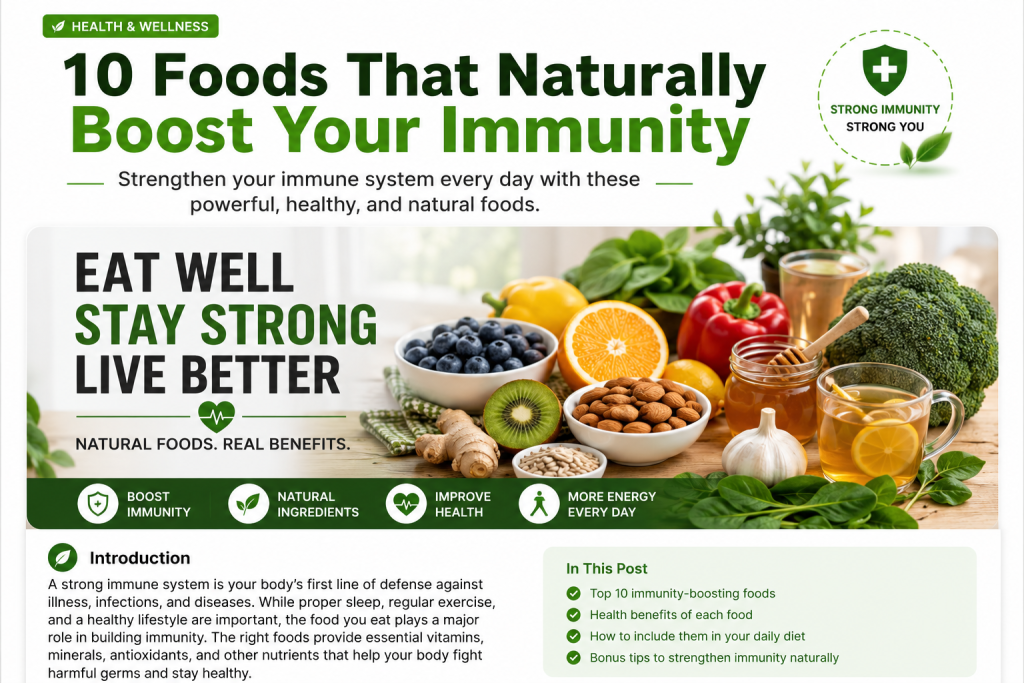
Introduction
A strong immune system is your body’s natural defense against bacteria, viruses, fungi, and other harmful microorganisms. Every day, your immune system works tirelessly to protect you from illnesses. While no single food can completely prevent disease, maintaining a healthy diet rich in vitamins, minerals, antioxidants, and other essential nutrients can help support normal immune function.
Modern lifestyles often include processed foods, inadequate sleep, stress, and lack of physical activity, all of which can affect overall health. Fortunately, nature provides many nutritious foods that contribute to a balanced diet and support the body’s immune system.
This guide explores ten foods that are rich in nutrients commonly associated with immune health, explains their benefits, and offers practical tips for including them in your daily meals.
1. Citrus Fruits
Citrus fruits are among the most popular foods associated with immune health because they are rich in Vitamin C, an essential nutrient involved in many body functions.
Popular Citrus Fruits
- Oranges
- Lemons
- Limes
- Grapefruits
- Sweet Lime (Mosambi)
Health Benefits
- Supports normal immune function
- Helps the body absorb iron from plant foods
- Contributes to healthy skin by supporting collagen production
- Contains antioxidants that help protect cells from oxidative stress
Easy Ways to Eat
- Fresh orange slices
- Lemon water
- Fruit salad
- Fresh juice without added sugar
2. Garlic
Garlic has been used in traditional cooking for centuries. It contains sulfur compounds such as allicin, which have been widely studied for their health-related properties.
Benefits
- Rich in antioxidants
- Adds flavor without extra calories
- Supports overall wellness when included in a balanced diet
How to Use
- Add to curries
- Mix with vegetables
- Use in soups
- Add to stir-fry dishes
3. Ginger
Ginger is a flavorful root commonly used in many cuisines and herbal beverages.
Benefits
- Contains natural antioxidants
- May help support digestive health
- Frequently used in warm teas during cold weather
Ways to Include It
- Ginger tea
- Smoothies
- Vegetable dishes
- Soups
4. Spinach
Spinach is packed with vitamins, minerals, iron, and antioxidants.
Nutrients Found in Spinach
- Vitamin A
- Vitamin C
- Vitamin K
- Iron
- Folate
- Magnesium
Benefits
- Supports healthy vision
- Contributes to normal immune function
- Rich source of plant nutrients
Best Ways to Eat
- Salads
- Smoothies
- Vegetable curries
- Soups
5. Yogurt
Plain yogurt contains calcium, protein, and live cultures that can be part of a healthy diet.
Benefits
- Good source of protein
- Contains calcium for healthy bones
- Can be enjoyed with fruits and nuts
Healthy Serving Ideas
- Yogurt with berries
- Smoothies
- Breakfast bowls
Choose plain yogurt with little or no added sugar whenever possible.
6. Almonds
Almonds are one of the healthiest nuts available.
Nutritional Value
- Vitamin E
- Healthy fats
- Fiber
- Protein
- Magnesium
Benefits
Vitamin E acts as an antioxidant that helps protect cells from damage.
Daily Intake
A small handful of almonds makes a nutritious snack.
7. Broccoli
Broccoli is considered one of the most nutrient-dense vegetables.
Rich In
- Vitamin C
- Vitamin K
- Fiber
- Potassium
- Antioxidants
Benefits
Regularly including broccoli as part of a balanced diet provides important vitamins and minerals.
Serving Suggestions
- Steamed broccoli
- Stir-fry
- Vegetable soup
- Salad
8. Green Tea
Green tea contains naturally occurring plant compounds called polyphenols, including catechins.
Benefits
- Contains antioxidants
- Lower in calories than many sweetened beverages
- Can be enjoyed hot or cold
Tips
Drink green tea without excessive sugar to maximize its benefits.
9. Turmeric
Turmeric is a bright yellow spice commonly used in Indian cooking.
Active Compound
Curcumin is the main natural compound found in turmeric.
Benefits
- Rich in antioxidants
- Adds flavor and color to meals
- Frequently included in traditional diets
How to Use
- Curries
- Soups
- Rice dishes
- Golden milk
10. Berries
Berries are colorful fruits packed with nutrients.
Examples
- Blueberries
- Strawberries
- Blackberries
- Raspberries
Benefits
- Rich in antioxidants
- Good source of fiber
- Naturally sweet and nutritious
Serving Ideas
- Oatmeal
- Smoothies
- Yogurt
- Fruit salad
Healthy Habits That Support Immunity
Food is only one part of a healthy lifestyle. Consider these additional habits:
- Drink enough water every day.
- Sleep 7–9 hours each night (age needs vary).
- Exercise regularly.
- Wash your hands frequently.
- Manage stress through relaxation techniques or hobbies.
- Eat a variety of nutritious foods instead of relying on supplements alone.
- Avoid smoking and limit alcohol if you drink.
Common Myths About Immunity
Myth 1: One food can prevent illness.
Fact: No single food can prevent disease. A balanced diet and healthy lifestyle work together to support overall health.
Myth 2: More vitamins are always better.
Fact: Taking more than the recommended amount of certain vitamins may not provide extra benefits and, in some cases, may be harmful. It’s best to follow medical advice before taking supplements.
Myth 3: Healthy foods work overnight.
Fact: Building healthy habits takes time. Consistency is more important than quick fixes.
Frequently Asked Questions (FAQ)
Which fruit is best for immunity?
Citrus fruits such as oranges, lemons, and sweet limes are excellent sources of vitamin C, while berries provide antioxidants. A variety of fruits is the best approach.
Can diet alone prevent illness?
No. A healthy diet supports normal immune function but cannot guarantee protection from infections or diseases.
Is garlic good for health?
Garlic is a nutritious ingredient that contains natural compounds and can be part of a balanced, healthy diet.
How much water should I drink?
Water needs vary based on age, activity level, and climate. Drink enough to stay hydrated, and increase intake during hot weather or exercise.
Should I take supplements?
If you think you may have a nutrient deficiency, consult a qualified healthcare professional before starting supplements.
Conclusion
Supporting your immune system begins with healthy daily choices. Including nutrient-rich foods such as citrus fruits, garlic, ginger, spinach, yogurt, almonds, broccoli, green tea, turmeric, and berries can contribute to a balanced diet and overall well-being. Combined with regular exercise, adequate sleep, stress management, and good hygiene, these habits can help you maintain a healthier lifestyle.
Rather than looking for a single “superfood,” focus on eating a wide variety of wholesome foods consistently. Small, sustainable changes over time often have the greatest impact on long-term health.